
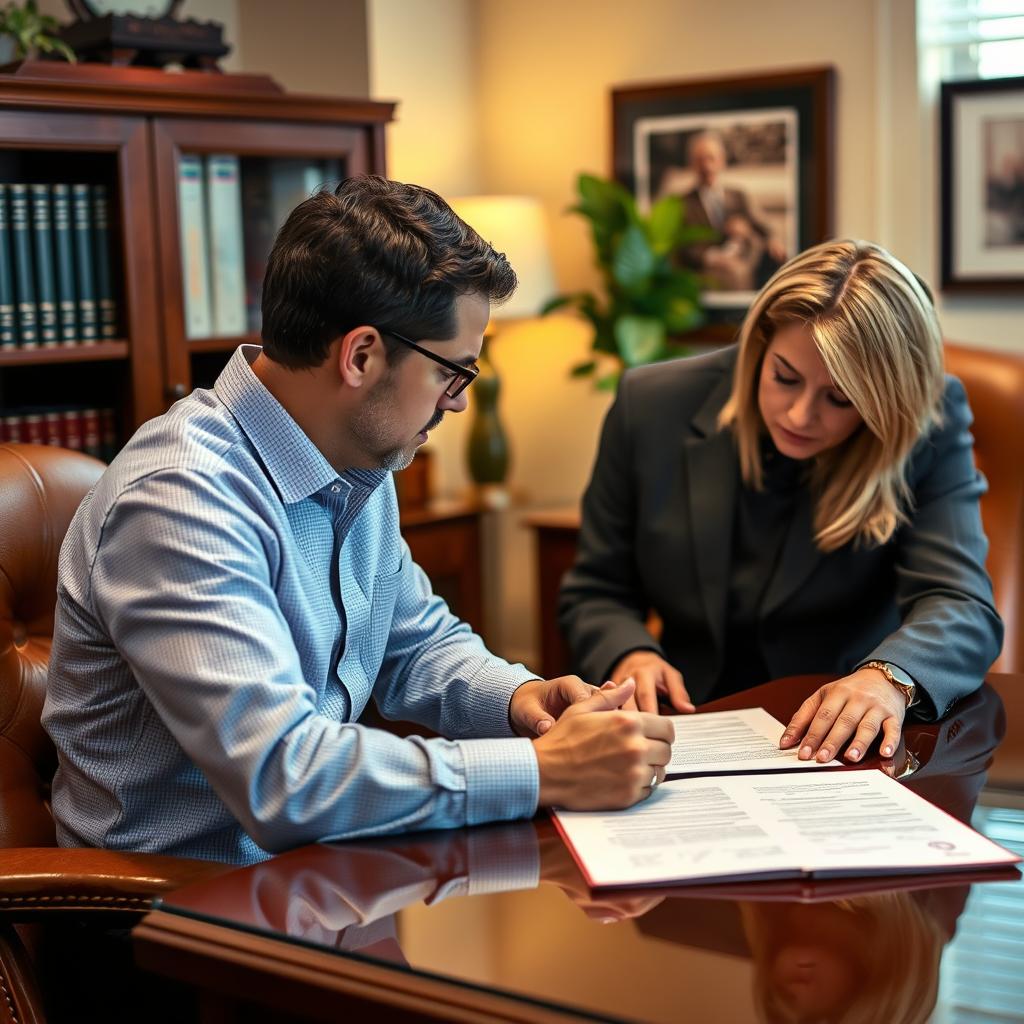
Paternity Lawyer Chesapeake, VA
When a child is born to unmarried parents in Virginia, legal fatherhood does not arise automatically. Without an established father, a child may lack financial support, inheritance rights, and access to a complete family medical history. Paternity cases in Chesapeake proceed through the Chesapeake Juvenile and Domestic Relations District Court, which handles custody, visitation, and child support matters, while the Chesapeake Circuit Court addresses divorce-related parentage issues. Under Virginia Code § 20‑49.1 et seq., either parent may initiate proceedings to legally identify the child’s father, setting the foundation for both parents’ rights and responsibilities. An experienced paternity attorney can help you navigate the court process, ensuring that the legal father‑child relationship is clearly established and that your rights — whether you are a mother seeking support or a father seeking custody — are protected. To discuss your situation with a Chesapeake paternity lawyer, call Law Offices Of SRIS, P.C. at (888) 437‑7747. Law Offices Of SRIS, P.C. – Advocacy Without Borders.
What Paternity Means in Chesapeake, Virginia
Paternity is the legal recognition of a parent‑child relationship between a father and a child. In Virginia, when a married woman gives birth, her husband is presumed to be the child’s legal father. For unmarried parents, however, no presumption applies, and paternity must be established through a formal acknowledgment or a court order. The Chesapeake Juvenile and Domestic Relations District Court, located at 307 Albemarle Drive, Chesapeake, VA 23322, has jurisdiction over standalone petitions to establish paternity, as well as related custody, visitation, and child support disputes. If the parents are unable to agree, the court may order genetic testing under Va. Code § 20‑49.1. Once paternity is legally confirmed, the father’s name can be added to the child’s birth certificate, and both parents gain enforceable legal rights and obligations.
Chesapeake, as part of the First Judicial District, is served by both the J&DR District Court and the Circuit Court. Paternity matters that arise in the context of a divorce or equitable distribution are heard in the Chesapeake Circuit Court, while all other paternity, custody, and support cases are handled at the J&DR level. The process typically involves filing a petition, serving the other parent, and attending a hearing. If genetic testing is required, the court will issue an order for a certified laboratory to conduct the analysis, and the results are generally admissible as evidence. Our Richmond location represents clients throughout Chesapeake, Deep Creek, Great Bridge, Greenbrier, and the surrounding area, appearing regularly in both courts to advocate for parents’ interests.
How Mr. Sris and His Of Counsel Handle Paternity Cases
Paternity cases can be emotionally charged and legally complex, particularly when parents disagree about fatherhood or when the establishment of paternity is intertwined with other family law matters such as custody, support, or divorce. Mr. Sris and his Of Counsel begin by meeting with the client to understand the family dynamic, gather relevant documentation, and explain the legal options. The team then prepares the appropriate petition — either a straightforward Acknowledgment of Paternity, when both parents agree, or a formal complaint to initiate court proceedings when there is disagreement or uncertainty.
Throughout the case, the attorneys work to protect their client’s rights while minimizing conflict where possible. They handle communications with the other parent or their lawyer, coordinate any court‑ordered genetic testing, and present evidence to the court on matters such as the child’s best interests, the father’s relationship with the child, and the financial needs of the family. Because many paternity cases involve related issues — such as child support calculation under Virginia’s guidelines or parenting time schedules — Mr. Sris and his Of Counsel can address all aspects of the family’s legal needs in one forum. The timeline of a case depends on the complexity of the issues and the court’s calendar, but the firm works to move each matter forward efficiently while giving each client the individual case review their situation deserves.
About Mr. Sris and His Of Counsel Team
Mr. Sris, Owner and Founder of Law Offices Of SRIS, P.C., has practiced law since 1997 and is admitted in Virginia, Maryland, the District of Columbia, New Jersey, and New York. A former prosecutor, he brings a thorough understanding of courtroom procedure and evidence to every family law matter. Mr. Sris testified before the Virginia House Courts of Justice Committee in support of 2019 HB 635 (chief patron Del. David Bulova), a bill that revised Virginia’s equitable distribution statute. Alongside a dedicated team of Of Counsel attorneys, Mr. Sris provides comprehensive family law representation, including paternity establishment, custody, support, and divorce litigation. Mr. Sris and his Of Counsel bring extensive combined legal experience. Results may vary.
The firm’s Richmond location serves clients in Chesapeake and the surrounding Hampton Roads communities. While the firm does not maintain a physical location in Chesapeake, Mr. Sris and his Of Counsel appear at the Chesapeake courts and represent parents in all phases of paternity proceedings. Every client works directly with an attorney who understands the local court procedures and the practical realities of family law in this jurisdiction. The firm’s goal is to help families reach stable, legally sound resolutions that protect the child’s welfare and each parent’s rights.
Frequently Asked Questions
What does a paternity lawyer do in Chesapeake?
A paternity lawyer helps parents establish the legal father‑child relationship in Virginia, handling everything from voluntary acknowledgments to contested court proceedings. In Chesapeake, a paternity attorney prepares and files petitions with the J&DR District Court or the Circuit Court, coordinates genetic testing when needed, and advocates for custody, visitation, and child support arrangements. The lawyer also advises clients on the consequences of establishing paternity, such as inheritance rights, medical history access, and a father’s obligation to provide financial support. For parents who are already involved in a divorce or custody battle, a paternity lawyer can ensure that the father’s rights are asserted and that the resulting court orders are legally enforceable. Having an experienced attorney helps you avoid procedural mistakes and protects your interests throughout the process.
How do I establish paternity in Virginia?
In Virginia, paternity can be established either voluntarily, through an Acknowledgment of Paternity signed by both parents, or by a court order after genetic testing. The voluntary process is often completed at the hospital when the child is born, or later at the Virginia Department of Health’s Division of Vital Records. If the father is unwilling to acknowledge paternity or the mother disputes it, a parent may file a petition in the Chesapeake Juvenile and Domestic Relations District Court. The court may then order genetic testing through a certified laboratory. Once the test results are received, the judge issues an order adjudicating paternity. The father’s name can then be added to the birth certificate, and the court may address child support and custody in the same proceeding.
Why is establishing paternity important for fathers and mothers?
Establishing paternity gives a child the right to financial support, inheritance, and access to both parents’ medical histories, while granting fathers legal standing to seek custody or visitation. For mothers, paternity establishment allows them to pursue child support from the father and ensures the child has a legally recognized parental relationship. For fathers, it opens the door to meaningful involvement in the child’s life, including decisions about education, healthcare, and religion. In Virginia, an unmarried father has no automatic right to custody or visitation without established paternity. Once paternity is legally confirmed, both parents share in the duties and rights that come with raising the child, and the court can enforce these obligations if either party fails to comply.
What if the father disputes paternity in Chesapeake?
If a father disputes paternity, the Chesapeake Juvenile and Domestic Relations District Court can order genetic testing to determine whether he is the biological parent. Either the mother, the alleged father, or the child’s legal representative may file a motion requesting testing. The court will issue an order specifying the laboratory and timeline for the analysis. If the test results show a high probability of paternity, the court will enter an order establishing the father’s legal status. If the test excludes the alleged father, the case is dismissed, and no parental obligations attach. During the dispute period, temporary orders regarding custody or support may be entered if the child is in immediate need. An attorney can help you present evidence and challenge the petition if you believe the claim is unfounded.
Can a paternity order be modified later?
Paternity orders can be modified if there is new evidence, such as DNA test results that disprove the established father’s biological connection, or if circumstances change significantly. In Virginia, a party may petition the court to set aside or amend a paternity determination within a reasonable time after discovering new information. The court will consider whether the modification serves the child’s best interests. Changes to child support or custody often accompany a paternity modification, and the court may adjust those orders as well. Because modification proceedings require a new petition and sometimes additional evidence, it is advisable to consult a family law attorney before filing. Mr. Sris and his Of Counsel can evaluate whether the facts of your case support a modification and help you navigate the court process.
Do I need a lawyer for a paternity case in Virginia?
You are not legally required to have a lawyer, but working with an experienced paternity attorney helps protect your rights and navigate the complexities of Virginia family law. Paternity proceedings can involve detailed paperwork, genetic testing protocols, and court hearings that demand careful preparation. An attorney can ensure that all filings are correct, that evidence is presented effectively, and that your parental rights are fully asserted. Additionally, if the case involves related issues such as custody, child support, or domestic violence, legal representation becomes even more critical. Mr. Sris and his Of Counsel offer consultations to discuss your situation. To speak with a Chesapeake paternity lawyer, call (888) 437‑7747.
Related Family Law Pages:
Family Law Lawyer Fairfax County, VA |
Family Law Lawyer Fairfax City, VA |
Family Law Lawyer Falls Church, VA |
Family Law Lawyer Prince William County, VA |
Family Law Lawyer Manassas, VA
Primary Legal Resources: Virginia Code Title 20 – Domestic Relations | Virginia Juvenile and Domestic Relations District Courts | Virginia Judicial System
Attorney advertising. Prior results do not guarantee a similar outcome. Results may vary.
Case results depend on a variety of factors unique to each case.