
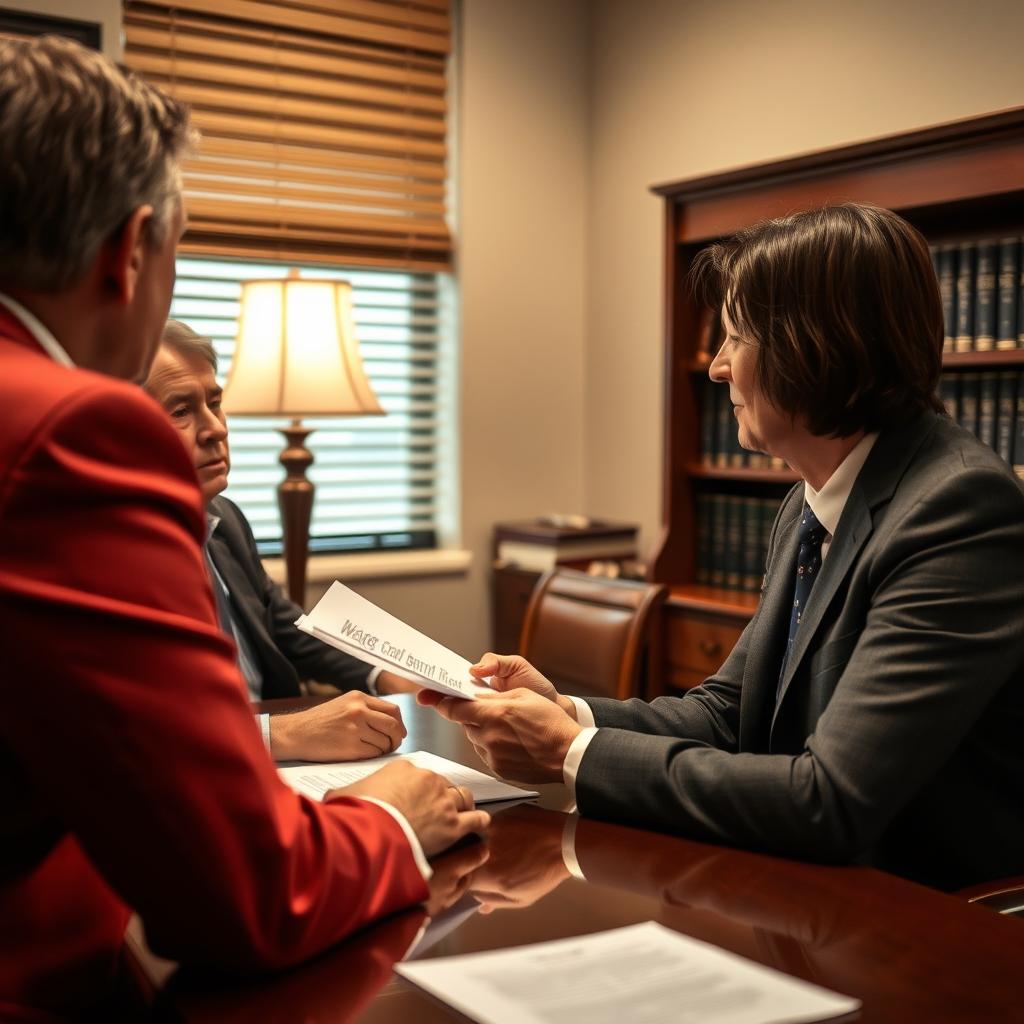
Wage Garnishment Child Support Lawyer Culpeper County, VA
When a court enters a child support order and payments fall behind, the payor’s wages can be directed to the Virginia Department of Social Services or to the custodial parent through a wage‑garnishment mechanism. In Culpeper County, that process involves the Culpeper County Juvenile and Domestic Relations District Court — where standalone child‑support and enforcement matters are heard — or the Culpeper County Circuit Court if the support obligation is part of a broader divorce or equitable‑distribution proceeding. A wage‑garnishment order can shift a substantial portion of each paycheck before it reaches the earner, creating immediate financial strain. Law Offices Of SRIS, P.C. Concentrates on family‑law matters for residents and payors in Culpeper, Brandy Station, Mitchells, Rixeyville, and the surrounding Sixteenth Judicial District. Mr. Sris, Owner and Founder of the firm, and his Of Counsel bring decades of experience to wage‑garnishment challenges, enforcement‑defense, and support‑modification petitions. For a direct conversation about your situation, call (888) 437‑7747. Law Offices Of SRIS, P.C. – Advocacy Without Borders.
What Wage Garnishment Child Support Means in Culpeper County
In Virginia, child‑support obligations are calculated under the statutory guidelines at Va. Code § 20‑108.1. Once a support order is entered — whether by the Culpeper County Juvenile and Domestic Relations District Court in a standalone support case or by the Culpeper County Circuit Court as part of a divorce decree — the Division of Child Support Enforcement (DCSE) or a private party can seek an income‑withholding order. That order directs the payor’s employer to deduct a portion of each paycheck and forward it to the appropriate recipient. The amount withheld is set by the guideline formula; it is not arbitrary, but it can still feel overwhelming for a payor who has experienced a change in income, job loss, or an unexpected expense.
Culpeper County families navigate these issues at 135 West Cameron Street, where both the J&DR District Court and the Circuit Court hold sessions. The J&DR Court handles enforcement of existing support orders, show‑cause proceedings for non‑compliance, and motions to modify support when circumstances change. The Circuit Court takes jurisdiction when a support obligation is embedded in a divorce case, including equitable distribution and spousal maintenance. A wage‑garnishment proceeding is not a separate lawsuit; it is an enforcement tool attached to an underlying support order, and the payor has the right to object, request a hearing, and present evidence regarding ability to pay, miscalculation, or other defenses. Because the process moves administratively first, many payors do not realize they can challenge the garnishment until it has already started. Working with counsel who understands both the local court culture and the substantive law can make a meaningful difference.
How Mr. Sris and His Of Counsel Handle Wage Garnishment Child Support Cases
Mr. Sris and his Of Counsel begin by reviewing the underlying support order, the income‑withholding notice issued by DCSE or the private party, and the payor’s actual financial circumstances. A wage‑garnishment challenge often requires moving quickly to schedule a hearing — either in the Culpeper J&DR Court or the Circuit Court — before several pay periods have passed and the arrears have grown. The legal team examines whether the support calculation accurately reflects the payor’s current income, whether the payor has been given proper credit for direct payments, and whether any defenses to the enforcement action are available, such as a pending modification petition or a procedural defect in the withholding order.
In many instances, a parallel request to modify the ongoing support obligation is the most effective way to address a wage‑garnishment problem. The Virginia guideline formula permits courts to adjust support when a material change in circumstances has occurred, including a substantial increase or decrease in either party’s income. Mr. Sris and his Of Counsel will prepare and file the necessary pleadings, marshal financial records, and present the modification case to the court. When the matter involves contested issues, they represent clients at evidentiary hearings and argue for a result that reflects the statutory factors. Because every family’s situation is different, the team avoids cookie‑cutter approaches and instead builds a strategy grounded in the specific facts and the applicable law.
About Mr. Sris and His Of Counsel Team
Mr. Sris, Owner and Founder of Law Offices Of SRIS, P.C., has practiced law since 1997. A former prosecutor, he brings a courtroom‑tested perspective to every matter the firm handles. He is admitted in Virginia, Maryland, the District of Columbia, New Jersey, and New York, and he testified before the Virginia House Courts of Justice Committee in support of 2019 HB 635 (chief patron Del. David Bulova). Mr. Sris keeps his personal caseload small so that every client receives meaningful attention, and he works collaboratively with a network of experienced Of Counsel who bring additional depth in family law, criminal defense, and civil litigation. The Of Counsel team is composed entirely of non‑employee attorneys engaged through Excella; none are called associates or partners, and each brings an independent practice history that strengthens the firm’s collective capability.
Mr. Sris and his Of Counsel bring over 120 years of combined legal experience. Results may vary. They have documented 4,739+ case results across all practice areas since the firm was founded. The team is supported by professionals who speak English, Spanish, Tamil, French, and Portuguese, so language is rarely a barrier to effective representation. For Culpeper County matters, clients meet with counsel by appointment at the firm’s Fairfax location or arrange consultations by phone.
Culpeper County General District Court is currently presided over by Hon. Claiborne H. Stokes Jr.. Court hours: Mon‑Fri 8:00AM‑4:00PM. Counsel appearing on family law matters should plan filings accordingly.
Frequently Asked Questions
Can my wages be garnished for child support in Culpeper County?
Yes, wage garnishment is a standard enforcement tool for child support in Virginia, and it is routinely used in Culpeper County. Once a support order is in place, the Division of Child Support Enforcement or the custodial parent can obtain an income‑withholding order that directs your employer to deduct payments from your paycheck. You have the right to a hearing in the Culpeper County Juvenile and Domestic Relations District Court — or the Circuit Court, if the support is part of a divorce case — to challenge the amount, present evidence of changed circumstances, or request a modification. Acting quickly after receiving notice is important because the withholding can begin before a hearing is held.
How does a lawyer defend against wage garnishment for child support in Virginia?
An experienced family‑law attorney can challenge a wage‑garnishment order by examining the underlying support calculation, verifying that the payor has received proper credit for payments made directly, and identifying procedural defects in the withholding process. Contesting the garnishment often goes hand‑in‑hand with a motion to modify the ongoing support obligation when the payor’s income has materially changed. Counsel can also negotiate with the other party or with DCSE to establish a payment plan that avoids the immediate financial impact of a full garnishment while addressing arrears.
What should I do if I am facing a wage‑garnishment order in Culpeper County?
If you receive notice of a wage‑garnishment order, contact a family‑law attorney promptly to review the order and discuss your options before several pay periods have passed. Gather your most recent pay stubs, tax returns, and any documentation showing direct child‑support payments you have made. Do not ignore the notice — the withholding can start without further court action, and the arrears will continue to accumulate. An attorney can file the necessary motions to request a hearing in the Culpeper J&DR Court or Circuit Court and can help you present a defense based on miscalculation of support or a change in financial circumstances.
Do I need a lawyer to stop a wage garnishment for child support?
You are not legally required to have a lawyer to challenge a wage‑garnishment order, but an attorney’s guidance can be critical because the procedural rules and substantive law are complex. A successful challenge usually involves demonstrating a change in income, a miscalculation of the guideline amount, or a failure to credit payments properly. An attorney who regularly practices in Culpeper County courts will know the local filing requirements, the judges’ expectations, and the most effective way to present evidence. Without counsel, you risk missing deadlines, failing to raise valid defenses, and allowing an avoidable garnishment to continue.
How long does a child support case take in Culpeper County?
The timeline for a child‑support matter in Culpeper County depends on whether the case is an enforcement action, a modification petition, or an initial support determination, and on the court’s calendar. An emergency motion to stop a wage garnishment can often be heard on shortened notice if the court finds an immediate need. A contested modification hearing may take several months from filing to final order, depending on the availability of the court and the complexity of the financial issues. Uncontested matters, where both parties agree on the new support amount, typically resolve more quickly. In every scenario, the court prioritizes the child’s best interests while ensuring that both parties have a fair opportunity to be heard.
Additional Culpeper County family‑law resources: Family Law Lawyer Fairfax County | Family Law Lawyer Prince William County | Family Law Lawyer Manassas | Family Law Lawyer Falls Church
Official Virginia primary sources: Virginia Code Title 20 (Domestic Relations) | Culpeper County General District Court | Virginia Judicial System
Attorney advertising. Prior results do not guarantee a similar outcome. Case results depend on a variety of factors unique to each case. Results may vary.